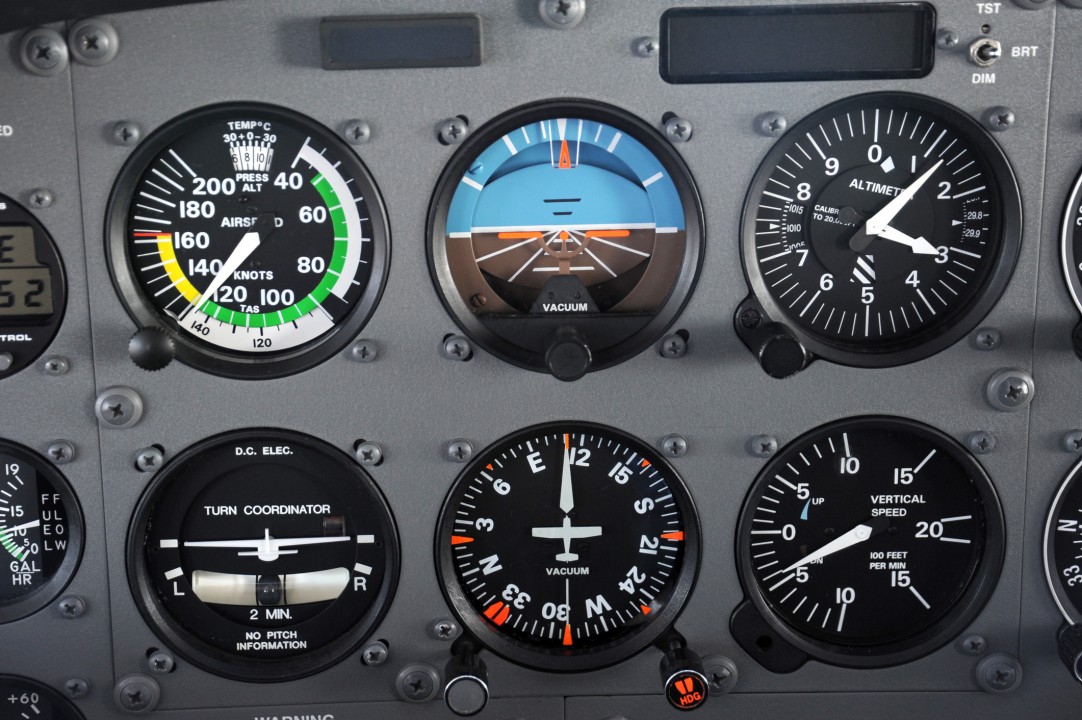
Steam Gauges
Six analog dials and a vacuum-driven attitude indicator. The cockpit you'd train in at most schools is older than most students. None of it transfers to a regional jet or major airline cockpit.
Your Private Pilot License and your gateway to everything that comes next. Train at your own pace in Diamond DA40 NG glass-cockpit airplanes, work real Class C airspace with ATC, and you have a dedicated flight instructor so you finish without having to wait for a checkride.
KCHS is Class C airspace. Real ATC, real radio work, real wake separation. You learn to communicate clearly with controllers from your first lesson — most students from outlying fields don't get this for years.
Diamond DA40 NG: composite airframe, Jet-A FADEC engine, Garmin G1000 NXi glass cockpit with synthetic vision, GFC700 digital autopilot. You learn in the platform you'll be flying for the rest of your career.
Online course handles the FAA written prep at your pace. Your CFI complements it with one-on-one ground sessions — applying the book to your actual aircraft, your actual checkride, your actual flying.
We work directly with local DPEs to schedule your checkride. No waitlist scramble. When you're ready, the date is locked.
$100/hr Redbird AATD sim — FAA-loggable toward your PPL, perfect for emergency procedures, instrument intro, and bad-weather days. Time still counts.
Three months plus, work at your pace. Fly 1, 2, or 3 lessons a week as your schedule allows. We meet you where your life is.
The FAA minimum is 40 hours of flight time. Where you land depends on training cadence, weather, and personal aptitude. We build every estimate at the 40-hour mark so you know your floor. The cost calculator gives you a real number based on your goals.
Most flight schools still train on 1970s cockpits. The skills don't transfer to airline equipment. CRAFT trains you on modern glass and FADEC from day one, so you spend zero time relearning when you upgrade.
Six analog dials and a vacuum-driven attitude indicator. The cockpit you'd train in at most schools is older than most students. None of it transfers to a regional jet or major airline cockpit.
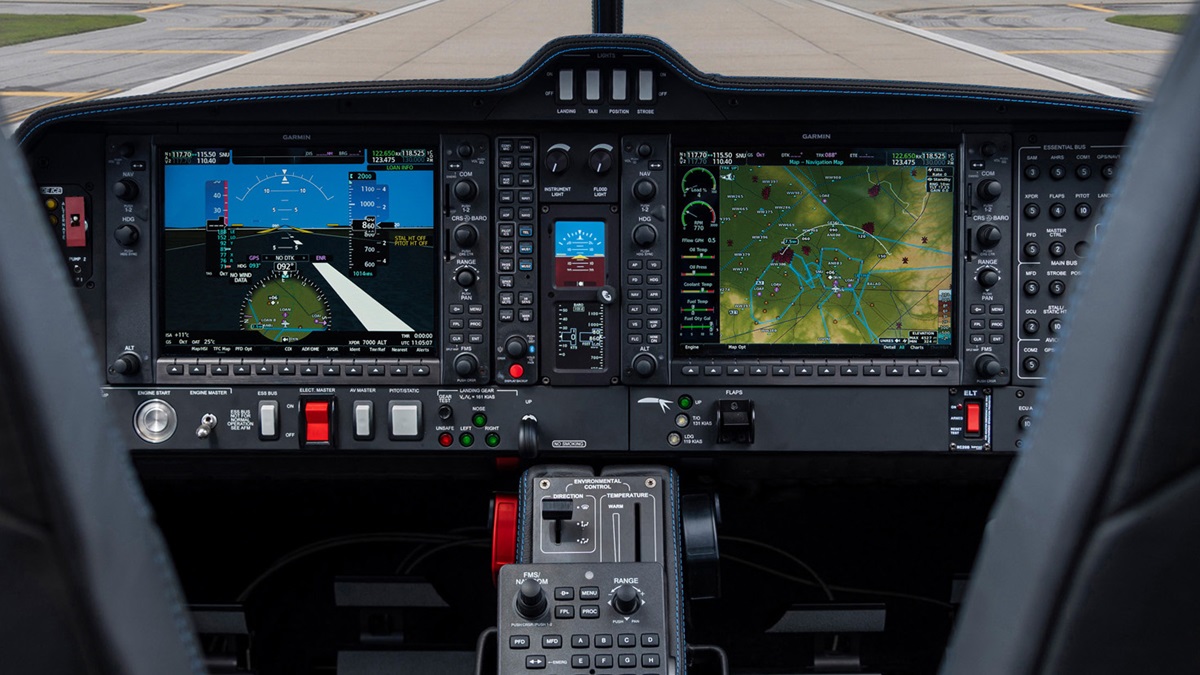
Two big PFD/MFD displays, synthetic vision, integrated GPS, traffic, weather, and a GFC700 digital autopilot. This is the same family of avionics you'll see in regional jets and corporate aircraft. The hours on this panel pay dividends for the rest of your career.
Every hour you log on a G1000 platform is an hour you don't have to learn from scratch when you upgrade to an IFR rating, commercial, or your first airline type rating. Glass cockpit skills compound. Steam gauge skills don't.
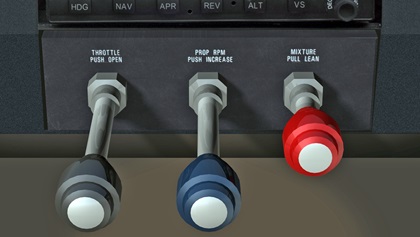
Throttle, propeller pitch, mixture. Three controls to manage on every power change, every climb, every descent. Mismanage any of them and you're cooking cylinders or detonating fuel. Cognitive load that has nothing to do with actually flying the airplane.
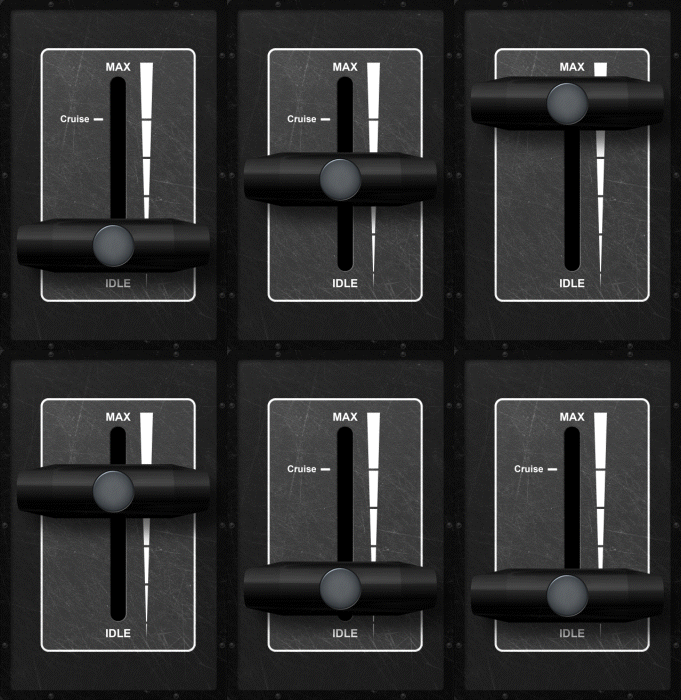
One lever. Push for more power, pull for less. The Full Authority Digital Engine Control computer manages prop pitch, fuel flow, and mixture for you in real time. The Diamond DA40 NG was the first FAA-certified Part 23 piston aircraft with a single-lever FADEC.
Every modern jet, every turboprop, every regional and major airline cockpit you'll ever sit in uses single-lever digital engine control. Learning on three levers is learning a skill you'll have to unlearn when you make the jump. Train on FADEC at the PPL stage and the muscle memory carries straight through to the right seat of an E175, CRJ, or 737. You're not just learning to fly, you're learning to fly the future.
FADEC Jet-A turbodiesel, G1000 NXi, GFC700 autopilot, synthetic vision, ADS-B in/out. Pay-per-hour wet rental during training.
One CFI through the entire program. No revolving door of teachers — consistency cuts hours and costs.
Self-paced video course covers everything on the FAA Private Pilot written. Pass it before checkride, log it permanently.
Your CFI complements the online course — applying book material to your actual aircraft, your actual flying.
$100/hr loggable simulator time. Perfect for hood work, emergency procedures, and weather days. Counts toward your rating.
We work directly with local DPEs to schedule your checkride. When you're ready, the date is locked.
The Private Pilot course is broken into clean stages so you always know where you are. We're Part 61, so the pace is built around you, not a fixed syllabus. Hit the final stage, schedule with a DPE, and walk out with your certificate.
Learn basic aerodynamics, fundamental flight maneuvers, aircraft systems and operations, plus weight-and-balance and aircraft-performance calculations. The Redbird AATD is used heavily to introduce new procedures before you take them to the airplane.
Plan and conduct cross-country flights using pilotage, dead reckoning, and electronic navigation. Work with ATC across Class C and D airspace. Gain proficiency in night and basic instrument flying. Evaluate weather forecasts and reports to make real go/no-go decisions.
Sharpen cross-country proficiency and lock in every ACS maneuver to checkride standard. Mock-oral exam and ACS walkthrough. When you're ready, we schedule you with an FAA Designated Pilot Examiner (DPE).
Honest estimate built at the FAA minimum of 40 hours. Use the calculator for your personal number based on your training cadence.
Book a $325 Discovery Flight, talk to a real CFI, or run the calculator for your personal estimate. No commitment, no pressure.